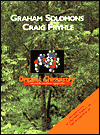
1. Organic Chemistry, 7th ed. upgrade, Graham Solomons & Craig Fryhle
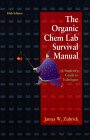
2. The Organic Chem Lab Survival Manual, 5th ed., Zubrick
(Recommended) Study Guide to Organic Chemistry,7th ed. upgrade, Solomons & Fryhle
| Prof. Irvin J. Levy Office Hours: MWF, 12:30-1:30pm T, 10:30-1:00pm Or by appointment |
There is excitement, adventure and challenge and there
can be great art in organic synthesis. - R.B. Woodward |
TEXTS
1. Organic Chemistry, 7th ed. upgrade, Graham Solomons & Craig Fryhle
2. The Organic Chem Lab Survival Manual, 5th ed., Zubrick
(Recommended) Study Guide to Organic Chemistry,7th ed. upgrade, Solomons & Fryhle
ADDITIONAL MATERIALS
1. Bound notebook for laboratory
2. Safety goggles as required by Department
3. Protective gloves
(Recommended) Darling Flexible Stereochemical Models
MODES OF EVALUATION
Organic Chemistry is very much like a language. As with any language, mastery is only possible with regular practice. Accordingly, homework assignments following the enclosed Class Schedule will be given daily. It is expected that the assignment will be completed before the next lecture. Homework will be assigned to help clarify important concepts; however, homework will not be collected and will not directly affect the course grade. Homework does, of course, affect the grade in that it is unlikely that the course content can be mastered without significant practice. Self-evaluation of homework will be possible through the use of the Study Guide.
A brief quiz covering recent lecture material will normally be given at the beginning of every other class period. The first quiz will occur on the fourth day of class. Regular attendance is, thus, necessary to achieve success in the course. The three lowest quiz scores will be discarded when calculating the final quiz score. Make-up quizzes will not be administered under any circumstances. All quizzes are closed-book, closed notes.
Since the ability to communicate effectively is a key to success in scientific endeavors, a writing assignment (the Digital Organic Library) is an important element in this course. This paper will be ten to twelve pages of double-spaced text (plus any tables, figures etc.), word-processed, laser-printed, with end-notes, annotated bibliography, end-of-chapter questions and their solutions. Important note : this is not a standard research paper. Please refer to the section below which describes the style of the paper before proceeding! A list of possible topics is provided; however, individual interests may be pursued with permission. While content is extremely important, this assignment will also be evaluated in terms of form of presentation. Due to the complexity of this project, several intermediate milestones are due (sse handout). Failure to observe these due dates will result in a one-half letter grade reduction in the final paper grade for each milestone missed. Handwritten milestones will not be accepted. The final paper is due as shown on the Class Schedule below. Late submissions will be penalized one letter grade for each day (or portion thereof) late - "Big mistake. Big. Huge."
Three Opportunities will be administered on the dates listed below. Make-ups will be given only under extreme circumstances (illness, serious personal difficulty).
The final examination will be a multiple choice standardized American Chemical Society examination which is cumulative over both courses. Any student scoring at the national 90th percentile or higher on the this exam will automatically receive a grade of A in the course provided all laboratory work has also been completed.
Laboratory work will be assessed in the following way. A student is expected to attend all labs (or makeup assignment if missed through excusable absence), properly utilize a laboratory notebook (which will be subject to examination without notice), show evidence of preparation for lab (through lab quizzes, flowcharts, etc.), and strictly adhere to all chemical hygiene rules. It is usually very difficult to make up missed labs, thus it is essential that lab attendance be very faithful. The lab grade begins at 100% and will be decreased by 10% for each nonperformance of the expected standards. After a one time grace period (no penalty), upon violation of a chemical hygiene rule, the student will be asked to leave the lab for the remainder of the class period. This will result in two reductions to the lab grade (chemical hygiene violation, nonexcused absence).
Laboratory notebooks will be prepared by the student and will be assessed by a combination of self-evaluation and peer-evaluation (neither of which will affect the actual grade in the course) and by evaluation by the lab instructor. Students who perform all laboratory work, observe all chemical safety regulations, and maintain an acceptable laboratory notebook will receive full credit for laboratory effort (representing 67% of the lab grade). During the final laboratory session, a laboratory examination will be administered. The score on this examination represents 33% of the lab grade.
Scores on graded materials are not curved. Final grades will be computed as follows:
25% - Three Opportunities
20% - Quizzes (drop three low scores)
20% - Laboratory (includes lab exam)
20% - Paper
15% - Final examination (curved)
DIGITAL ORGANIC LIBRARY WRITING ASSIGNMENT
The choice of your topic for this paper is a vital key to your success. You need to choose a topic which is of interest to you in order to be able to present it in an interesting manner (believe it or not, scientific writing should be interesting as well as informative!).
Note carefully: your paper's audience is not the instructor but rather a group of your fellow classmates. Everything in the paper should be readily understood by another organic chemistry student. You may assume that this reader is an excellent student who has just completed the CH212 course. Consequently, any other material from outside this course (or the normal course of study for a sophomore college student) must be explained to this reader. Remember, for example, that not all organic chemistry students have attended a college biology course. Depending upon the topic it may be helpful to include solved example problems within the chapter.
When writing your paper, it may help to compose it as the text for a lecture to an audience filled with such students. This should insure that the paper is organized and developed in a very logical manner ). It is also a very good idea to read your paper aloud to insure that sentence structure,etc. is correct. Feel free to try it out on a friend, also, to determine whether you have gone overboard. Papers that present material beyond the audience described will be penalized even if they are technically accurate.
Several important dates apply to the various milestones in this project. The timely submission of all items is essential to success in the project. Details of the milestones follow.
Milestones
This milestone requires the selection of a specific focussed topic, along with the outline for the presentation of that topic in the paper. The final paper may deviate from this tentative structure; however, this milestone requires the author to think about what they will be presenting and in what order.
This milestone requires the submission of a list of references that have been obtained for preparation of the paper. For each reference you must give a brief (1 paragraph) description of the article/book/etc. You may not simply copy the output from an Infotrac search. You are to describe the article - not its abstract! In a second paragraph you will then explain how this reference will be useful in the preparation of your paper. This is an extremely important milestone.
Please note: web sites may provide much valuable background material for your work; however, the quality of content and permanence of this
information must be considered before placing a web site into a bibliography. In general only .edu or .org web sites will be acceptable
sources. In special cases a .com web site may be appropriate. In any case, every web site included in the bibliography must be approved in
advance by the professor. The only way to receive approval is to email the following to the professor far enough in advance to receive
approval before the deadline:
Title of the web page
Author of the web source (if known)
Date of the publication (if known)
Annotation (i.e. description of content and how it is useful)
Exact web address as it will be entered on a browser
This milestone requires the resubmission of the outline - probably in finer detail than the original. For each outline entry, you must also list the references (from the annotated bibliography and other new materials) which you currently plan to use for that section.
This milestone requires a word-processed draft of your paper to be submitted to a student in the class (as directed by the instructor). The student is responsible to read and critique this draft and return it to you by April 3.
Prepare a packet in a manila file folder with the following items in the order indicated
IJLEVY.COVERthe title, author and abstract page IJLEVY.OUTLINEthe revised outline IJLEVY.PAPERthe text of the paper IJLEVY.PROBLEMSend of chapter questions IJLEVY.SOLUTIONSsolutions to end of chapter questions IJLEVY.BIBLIOthe annotated bibliography with suggested "Further Reading" list IJLEVY.FIGURE1
IJLEVY.FIGURE2
etc.if your paper contains figures IJLEVY.TABLE1
IJLEVY.TABLE2
etc.if your paper contains tables
The following list of topics is meant to indicate the intended scope of the projects. The most common error is the pursuit of an enormously large topic, for example "biochemistry." Given the brief length of these papers, it is much more appropriate to present a thorough introduction to a very specific area of research. Another very common error is the choice of a topic in which the organic chemistry is clearly secondary to other interests. For example, some students have written papers which would be much more appropriate for a biology course. Accordingly, if you wish to pursue a topic of personal interest which is not on the list, be sure to inform me as soon as possible (lest your work be in vain). I will be happy to provide key references for the topics listed below.
ILLUSTRATIVE SAMPLE TOPICSMISCELLANEOUS INFORMATION
- Interstellar Organic Chemistry
- The SYNGEN program for organic synthesis design
- Ionomers - Ion Containing Polymers
- Molecular Structure-Property Relationships
- Automated Protein Synthesis
- Organic Flavors and Fragrances - Theory of design
- Buckyball - C60 Chemistry
- Chemical Communication by Insects
- Carbon-13 NMR Spectroscopy
- The Organic Chemistry of Night Vision
- Phase Transfer Catalysis
- Transition Metal Organometallic Compounds
- RETIRED: Ethnobotany: Drug Discovery
- Alkaloids: Structure and Physiological Properties
- Degradable Polymers
- Luciferin: Firefly Bioluminescence - Mechanism
- Hyperconjugation
- Computer Aided Retrosynthesis - LHASA
- Chemistry and Politics: RU-486
- Chemical Graph Theory
- Computer Aided Mechanistic Evaluation of Organic Reactions - CAMEO
- Organolanthanides as Synthetic Reagents
- Reactions Involving Orbital Symmetry
- Polyaniline: An Organic Semiconductor
- Use of Lanthanide Shift Reagents in NMR Spectroscopy
- Incorporation of Radioactive Isotopes in Organic Molecules
- Organosulfur Chemistry - Garlic Chemistry
- Taxol - Pharmaceutical Discovery and Development
- The Discovery of the Structure of Benzene
- Nondeterminism in the Lab - The HBr Addition Experiment
- Total synthesis of any organic compound
Make-up examinations will be allowed only if the absence is previously cleared with the instructor or in the event of an emergency. In the case of illness, a written excuse from the health center is required. In the case of a personal emergency, a note from the Center for Student Development is required.
Make-up quizzes are not administered under any circumstances.
Students with documented disabilities must identify themselves in writing no later than the second Friday of classes in order for an accommodation to be made available.
| Meeting(s) | Chapter | Topic |
|---|---|---|
| Jan 16 | 11 | Alcohols and ethers |
| Jan 18 | --- | continued |
| Jan 23 | --- | continued |
| Jan 25 | --- | continued |
| Jan 28 | --- | Milestone #1 due |
| Jan 28 | 12 | Alcohols from carbonyl compounds. Oxidation-reduction reactions and organometallic compounds |
| Jan 30 | --- | continued |
| Feb 1 | --- | continued |
| Feb 4 | --- | continued |
| Feb 6 | 13 | Conjugation - Resonance - Delocazation - Stability The Diels-Alder reaction |
| Feb 8 | --- | continued |
| Feb 11 | --- | continued |
| Feb 13 | --- | continued |
| Feb 15 | --- | continued |
| Feb 18 | --- | Milestone #2 due |
| Feb 18 | 14 | Aromaticity |
| Feb 20 | --- | continued |
| Feb 22 | --- | * * * OPPORTUNITY #1 * * * |
| Feb 25 | 15 | Reactions of aromatic compounds |
| Feb 27 | --- | continued |
| Mar 1 | --- | continued |
| Mar 4 | --- | Milestone #3 due |
| Mar 4 | 15 | Reactions of aromatic compounds, continued |
| Mar 6 | --- | continued |
| --- | --- | Spring Break! |
| Mar 18 | 16 | Aldehydes and ketones I. Nucleophilic addition to the carbonyl group |
| Mar 20 | --- | continued |
| Mar 22 | --- | continued |
| Mar 25 | --- | continued |
| Mar 27 | --- | * * * OPPORTUNITY #2 * * * |
| --- | --- | Easter Break! |
| Apr 3 | 17 | Aldehydes and ketones I. Aldol reactions |
| Apr 5 | --- | Milestone #4 due |
| Apr 5 | 17 | Aldehydes and ketones I. Aldol reactions, continued |
| Apr 8 | --- | continued |
| Apr 10 | --- | continued |
| Apr 12 | 18 | Carboxylic acids and their derivatives Nucleophilic addition-elimination at the acyl carbon |
| Apr 15 | --- | continued |
| Apr 17 | --- | continued |
| Apr 19 | --- | continued |
| Apr 22 | --- | FINAL PAPER DUE |
| Apr 24 | 19 | Synthesis and reactions of β-dicarbonyl compounds |
| Apr 26 | --- | continued |
| Apr 29 | 20 | Amines |
| May 1 | --- | continued |
| May 3 | --- | * * * OPPORTUNITY #3 DISTRIBUTED (TAKE HOME) * * * |
| May 3 | --- | continued |
| May 6 | --- | * * * OPPORTUNITY #3 COLLECTED * * * |
| May 6 | 21 | :Phenols and aryl halides Nucleophilic aryl substitution |
| May 8 | --- | continued |
| May 13 8-10am (sorry!) | --- | * * * FINAL EXAMINATION * * * |
Note: Laboratory is preceeded by a mandatory pre-lab lecture. Reading: Handouts will be provided online (links below) or in hard copy. Failure to read the required material before arrival at lab may result in a reduction in the laboratory grade. Unannounced laboratory quizzes will be used as necessary. These will be graded on a Pass/Fail basis. Passing grades will not affect the laboratory grade; however, each failing grade will reduce the final laboratory score by 1/2 letter grade.
| Meeting | Reading | Topic |
|---|---|---|
| Jan 22/23 | --- Solomons ch. 9 handout | Check-in NMR lecture, part 1 Light as reagent: Photochemical synthesis of benzopinacol Initial lab notebook assessment |
| Jan 29/30 | Solomons ch. 9 handout | NMR lecture, part 2 Problem solving with NMR spectra Peer review of lab notebook |
| Feb 5/6 | handout | Light as product: Synthesis and chemiluminescence of luminol |
| Feb 12/13 | handout | The Grignard syntheis of a 3° alcohol: Synthesis of triphenylmethanol |
| Feb 19/20 | handout | The Diels-Alder reaction: Synthesis of endo-norbornene-5,6-dicarboxylic anyhdride |
| Feb 26/27 | handout | Electrophilic aromatic substitution: Synthesis of p-nitroaniline |
| Mar 5/6 | handout | Nitroaniline workup |
| Mar 19/20 | handout | Identification of an unknown organic compound |
| Mar 26/27 | handout | Unknown lab continues |
| Apr 2/3 | handout | Unknown lab continues |
| Apr 9/10 | handout | Unknown lab continues |
| Apr 16/17 | handout | Unknown lab continues |
| Apr 30/May 1 | --- | TBA |
| May 7/8 | --- | Laboratory Exam; Check-out |